


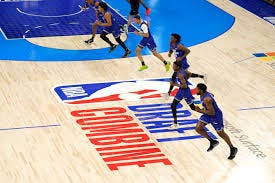
I have colleagues in Chicago this week watching every rep, every measurement, every movement screen. Thirty NBA teams have converged on Wintrust Arena to evaluate the same group of players with mostly the same tools that have been used, largely unchanged, for four decades.
Almost none of those tools measure what we actually know predicts whether a player makes it.
The Insight
The 2026 NBA Draft Combine runs prospects through anthropometric measurements, shuttle runs, agility drills, and 5-on-5 scrimmages. These are legitimate data points. They tell you about a player’s physical tools.
They are not, however, the predictors that have held up best in 85 years of performance research.
The physical measurements give us a starting point. The questions that actually govern whether those tools translate to professional performance are psychological.
How does AJ Dybantsa respond when a workout doesn’t go his way? Not what he says. What he does in the next rep. That tells you something about resilience under performance pressure that no vertical jump number captures.
How does a top prospect handle the transition from being the best player on his college team to an unknown rookie in a professional system?
The psychology of that transition — specifically the ability to accept and embrace a temporarily subordinate role — predicts development trajectories more reliably than any measurable physical attribute.
We know this because Schmidt and Hunter’s 85 years of research showed cognitive ability combined with structured psychological assessment produces the highest validity for performance prediction.
The teams in Chicago this week who ask the right questions in private interviews, who have structured behavioral assessments, who are measuring cognitive processing and motivational architecture alongside wingspan, will consistently outperform the ones making decisions based on tape and feel.
The margin compounds over years and over draft classes.
The Evidence
Frontiers in Psychology (2023): Athletic intelligence and NBA performance: Cognitive assessment was associated with NBA performance outcomes beyond physical athleticism. Alex’s take: The data is available. Front offices that use it gain an evaluation edge that most organizations haven’t closed.
Schmidt & Hunter (1998), Psychological Bulletin: Structured selection methods produce validity coefficients of .63 for predicting performance. No physical combine drill comes close. Alex’s take: The combine is a necessary input. It’s not sufficient. The gap between what it measures and what predicts performance is exactly where Caliber operates.
The Play
If you’re evaluating anyone this week — from a draft prospect to a job candidate — add one structured behavioral question to your assessment: ‘Describe a time when you were certain you were right and turned out to be wrong. What did you do in the next 24 hours?’
The answer tells you more about resilience, adaptability, and ego management than any speed drill or skills demonstration. It’s a one-question screen for coachability.
What the Combine measures is real. What it misses is the difference between a good player and a great one.
— Alex